What Does a Stairlift Cost in Massachusetts?
The range is wide because the staircase matters more than the brand. Here is how to read a stairlift quote without getting talked into the wrong one.
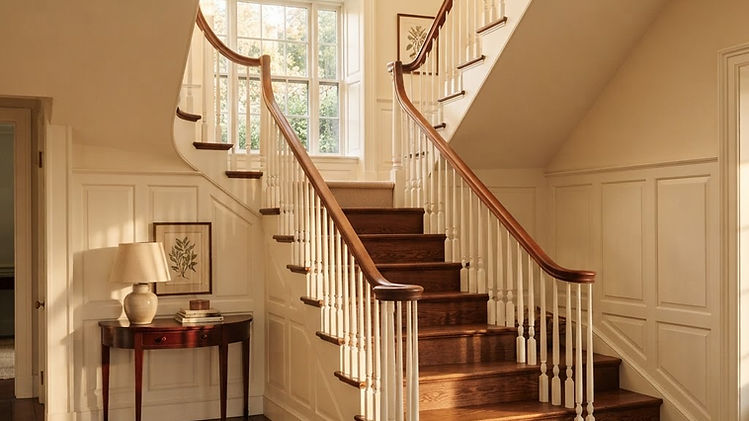
A stairlift is usually the single most expensive line item in an aging-in-place plan, and the quotes families receive for the same staircase can differ by thousands of dollars. Here is what the money actually buys, in plain terms.
The ballpark, before we go further
- Straight staircase, purchased and installed: roughly $2,000 to $6,000.
- Curved staircase, purchased and installed: roughly $8,000 to $15,000 or more. Curves are custom, and custom is expensive.
- Rental: commonly in the range of $300 to $500 a month plus installation and removal, which makes sense for a few months and stops making sense at about a year.
Treat those ranges as the shape of the market rather than a quote. The staircase decides the number, not the brochure.
What actually drives the price
- Straight or curved. A straight rail is cut from stock. A curved rail is measured, fabricated for your staircase, and installed once.
- Rail length and landing. A long run, a mid-landing, or a doorway at the top all change the design.
- Doorway and hallway clearance. A folded stairlift still occupies space at the bottom. Sometimes the seat has to be specified to fit.
- Wall structure. The rail carries weight, so the wall or stair stringer has to accept the fasteners. Older Massachusetts homes are usually fine, but it has to be checked.
- Electrical. Most units need an outlet near the bottom of the stairs. Running one is a licensed electrician's job.
- Permits. Some Massachusetts towns want a permit for the electrical work, the installation, or both. Ask who is pulling it.
- Removal and reinstallation. If your parent may move, ask now what it costs to take the unit with them and refit it.
- Service and warranty. The battery and the service contract are separate line items more often than families expect.
What a quote should show you
A quote worth comparing has the make and model, the rail type, the installation, the electrical work, the permit, the warranty term, the service agreement, and the removal policy, each as its own line. If a quote is one number on a business card, it is not a quote, it is a starting position.
Price these first
Before you spend five figures on a stairlift, spend a few hundred dollars on the cheap fixes that sometimes make it unnecessary:
- Handrails on both sides of the staircase, continuous from top to bottom.
- Better lighting, plus contrast strips on the top and bottom steps.
- Clearing the stairs completely and fixing any loose tread or worn runner.
- Reconsidering the layout. If a first-floor room can become a bedroom, that changes the whole plan for a fraction of the cost.
Sometimes the honest answer is that the stairs cannot be solved cheaply, and the lift is the least disruptive way for your parent to keep the upstairs bedroom they have used for forty years. That is a good outcome too. Our what it costs page covers the rest of the typical line items, from grab bars to ramps.
Renting versus buying
Rental makes sense for a defined, short period: recovering after a hospital stay, or a temporary arrangement before a move. Buying makes sense when the staircase is the long-term plan. A used unit has resale value, but far less than families expect, and installation is not transferable without cost.
Where we come in
We do not sell stairlifts. We get two or three quotes from installers we have vetted, put them side by side in plain language, tell you which line items are padding, meet the installer at the house, and confirm afterward that the rail is anchored where it is supposed to be. That is part of the membership, and it is the reason families who live out of state can trust the result without flying in.